
The workshop archive

Our Shared Stories

Five unfinished stories. Many possible paths. A shared practice of listening, questioning, and revision.

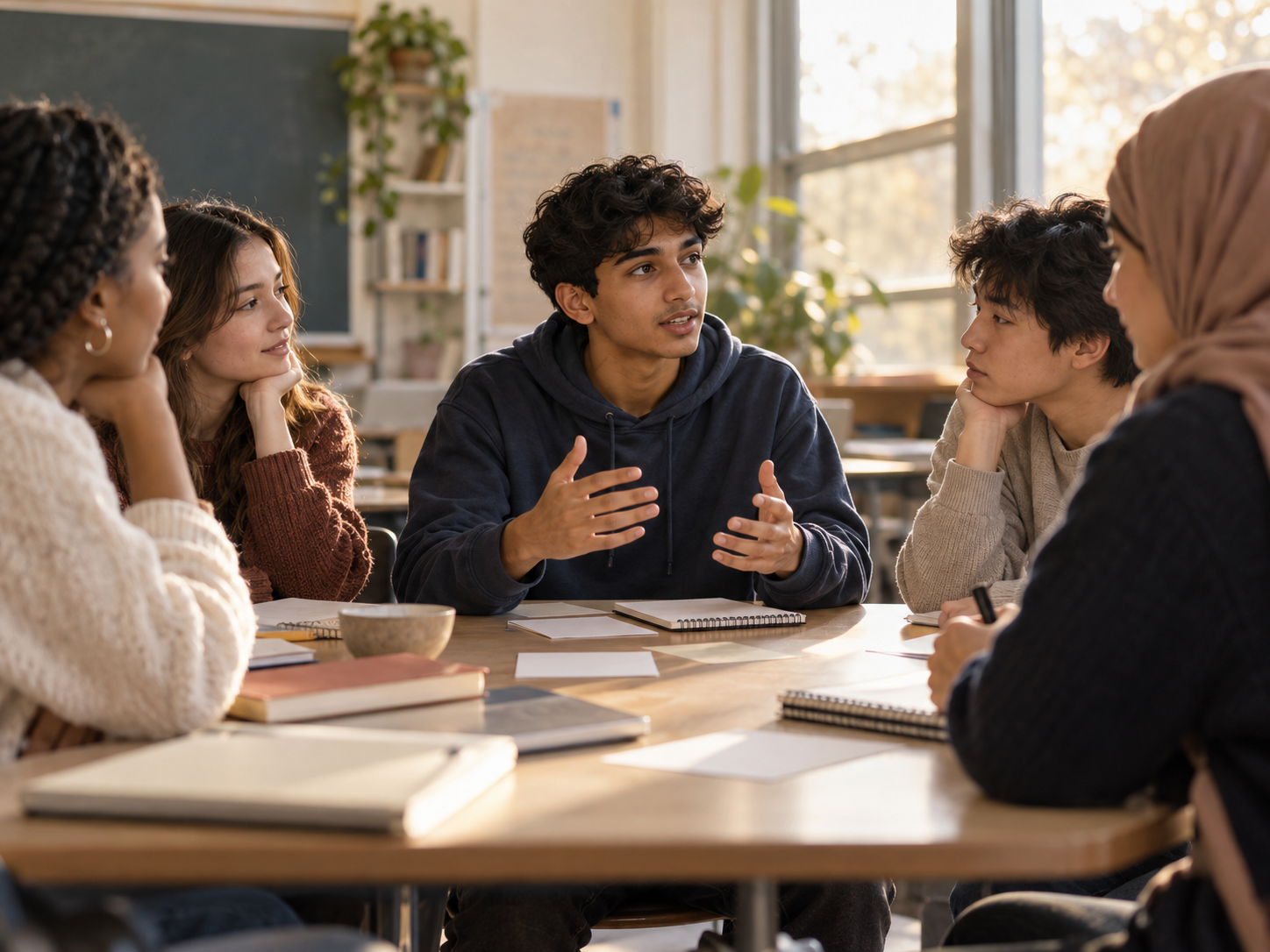
Workshop 01 cover: a soccer ball beside family celebration imagery

Workshop 01

The Game or the Gathering?

Theme: Migration, Faith, Family, and the Meaning of Success

1. The Starting Story:
Two Promises, One Choice

When Daniel first arrived in the United States, adjusting to his new high school was difficult. The language, classroom expectations, and unfamiliar social environment all made him feel out of place.

But soccer was different. On the field, he didn't have to search for the right English words or worry about understanding unfamiliar cultural norms. He just had to play. After a year of hard work, he finally earned a place on the school soccer team and gradually gained his teammates' trust.

Then came a difficult choice. The team's most important game of the season was scheduled for the same day as an important religious holiday his family had always celebrated together.

His grandmother, who still lived overseas, had already reminded him about their annual video call. For her, the holiday was more than a religious occasion. It was one of the few times when family members living in different countries could come together.

Daniel's coach told him that the game could affect his chances of becoming a starting player. His parents, meanwhile, assured him that they would support whatever decision he made.

Daniel looked at his coach's message, then at his grandmother's holiday reminder. He wanted to keep both promises, but he knew he had to choose.

2. What If?

What If A: What if Daniel decided to play in the game and celebrate afterward?

Daniel decided to play. His grandmother understood, and his parents promised that they could celebrate together when he returned.

On the day of the game, Daniel performed well. His team won, and his coach praised his progress. When he got home that evening, his family had prepared his favorite holiday dishes. Everything seemed to have worked out perfectly.

But when we began revising the story, a question came up: Was there anything Daniel had missed that could not simply be made up for later?

We added one detail. By the time Daniel returned home, his grandmother had already gone to sleep because of the time difference. He could still enjoy the holiday meal, but he had missed the time he had promised to spend with her.

The game remained an important achievement, but adapting to his new circumstances had also come with a loss that could not be entirely undone.

What If B: What if Daniel chose not to play in the game?

Daniel called his coach and explained that he had an important family commitment and would not be able to attend the game.

His coach was disappointed and warned him that missing the game might affect his future playing time. Daniel knew he might have to work even harder to earn a starting position, but he still chose to stay home.

During the holiday, his grandmother told him stories about how she had celebrated when she was young. She also spoke about relatives who had moved to other cities or countries and could rarely gather together anymore.

Daniel slowly realized that what he treasured most was not every step of the holiday ritual, but the time he spent with his family.

During our discussion, someone raised a question I had never considered: Could choosing to give up an opportunity that seems promising also be an act of courage?

What If C: What if Daniel played in the game but still felt regret?

Daniel decided to play. He performed well and helped his team win. Yet throughout the game, he kept thinking about the family gathering he was missing.

When he returned home, the celebration was already over.

He did not suddenly believe that soccer was unimportant, nor did he conclude that family should always come first. He was still proud of his performance, but he also regretted missing the chance to be with his family.

Our discussion did not resolve this contradiction. Instead, we acknowledged that some decisions naturally involve both gaining something meaningful and losing something equally important.

3. Reflection

At first, I hoped What If? would help participants see that migration does not only mean loss. It can also create opportunities and develop adaptability and resilience.

However, this story made me reconsider what resilience actually means.

I had grown accustomed to seeing progress, adjustment, and the willingness to seize opportunities as signs of personal growth. But if Daniel chose to stay with his grandmother, would that really make him less determined or less courageous?

Sometimes, protecting a meaningful relationship, even at the cost of an opportunity, can be a form of strength.

As the workshop's facilitator, I realized that my responsibility was not to guide everyone toward what I considered the most reasonable solution. Instead, it was to help people understand why others might make choices different from their own.

Bridge building does not necessarily mean leading everyone toward the same destination. Sometimes, it means helping people understand why others have chosen different paths.

Should the success of a decision be measured by the opportunities it creates, the relationships it protects, or the values it reflects?
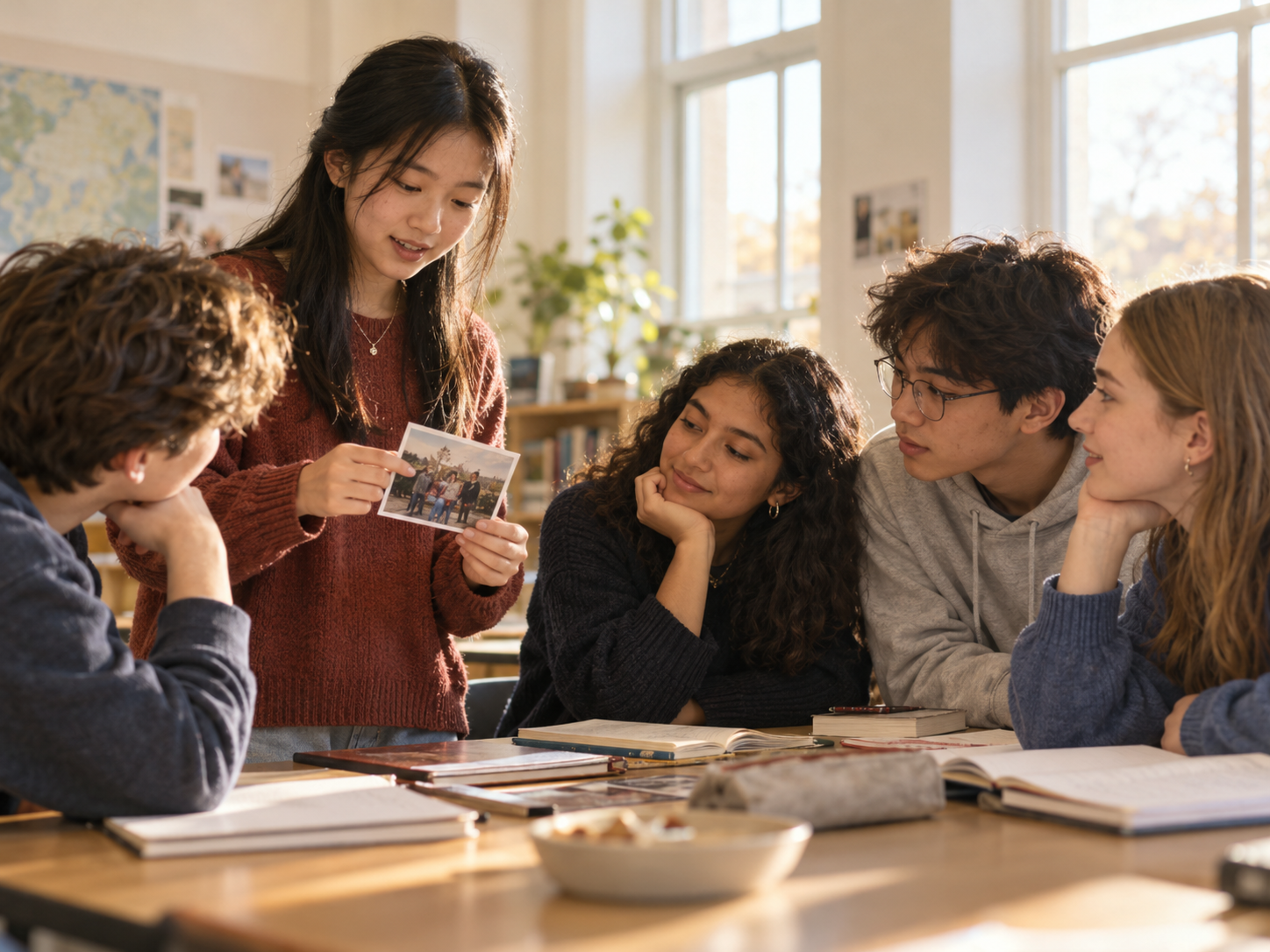

Workshop 02 cover exploring language and translation

Workshop 02

The Words I Couldn't Translate

Theme: Language, Identity, Belonging, and the Shared Responsibility of Understanding

1. The Starting Story:
A Word That Couldn't Be Fully Translated

Mei had recently moved from China to the United States. Although she studied English every day, she still struggled to express certain ideas that had always come naturally to her in Chinese.

One day, her English teacher asked each student to choose a word that represented something important about their family and explain its meaning to the class.

Mei chose “团圆” (tuányuán).

At first, she translated it as “reunion,” but the English word never felt quite right.

To Mei, 团圆 meant more than people coming together after being apart. It meant her grandmother waiting until everyone had arrived before serving dinner. It meant leaving a place at the table for a relative who could not return home for the holiday. It meant the sound of family members sitting together, talking and laughing around the dinner table.

Mei kept trying to describe these memories in English, but with every revision, she felt as though something meaningful was being lost.

Eventually, she deleted most of her presentation and left only one sentence:

“My family enjoys spending time together.”

2. What If?

What If A: What if Mei decided to keep the word “团圆” in Chinese?

The group imagined Mei writing the two Chinese characters on the board instead of replacing them with an English translation.

She could play a recording of her grandmother calling everyone to dinner and then describe the memories associated with the word in English.

Mei had never thought of explaining the word that way, but the question reminded her of relatives who could no longer gather with the family during the holidays.

But another participant asked, “Could this word also include missing the people who aren't there?”

She realized that someone who did not understand Chinese could still connect with part of the word's meaning through their own life experiences.

What If B: What if a classmate misunderstood her explanation?

After Mei introduced her family's holiday traditions, a classmate asked, “So does every Chinese family have to celebrate this way?”

Mei felt uncomfortable. She had only wanted to talk about her grandmother, but suddenly she was being treated as a representative of an entire culture.

At first, she considered gathering more information to explain the differences among regions and families in China.

Eventually, however, she decided to tell her classmate, “I can tell you how my family celebrates, but I can't speak for every family.”

What If C: What if Mei decided not to explain everything?

Mei described her grandmother cooking, the conversations around the dinner table, and their holiday gatherings.

But when her teacher asked what emotions the word 团圆 represented, Mei admitted that she still could not find an English expression that captured its full meaning.

After class, another student from an immigrant family approached her and said there was a word in their own language that was also difficult to translate.

The two began using pictures, gestures, and personal memories to explain their words to one another.

They did not understand each other completely, but a new conversation had begun.

3. Reflection

I have always believed that moving between China, Thailand, Switzerland, and the United States, along with my experience using different languages, gave me the ability to adapt.

When someone could not understand me, I would try another language or find a different way to express myself.

But communication cannot always depend solely on the speaker's efforts.

A person should not have to translate every part of their experience into a language familiar to others in order to deserve understanding. Sometimes, listeners also need to accept uncertainty, ask thoughtful questions, and make an effort to understand what cannot be expressed precisely.

As a facilitator, I want to do more than help participants express themselves with confidence. I also want to encourage others to become more thoughtful and attentive listeners.

Does understanding someone mean that every part of their experience must be translated?

Workshop 03 cover exploring food, memory, and migration

Workshop 03

A Recipe Without a Home

Theme: Food, Migration, Cultural Memory, and Connection

1. The Starting Story:
A Dish That No Longer Tasted Like Home

After moving from Thailand to Switzerland, Arun found many new opportunities at school, but he struggled to get used to the local food.

Back in Thailand, his mother often made a familiar dish for him after school. More than the ingredients themselves, he remembered the smell coming from the kitchen and the feeling of sitting down to eat with his family.

One weekend, he decided to try making the dish himself.

He called his mother for instructions, wrote down the recipe, and visited several grocery stores, only to discover that some of the essential ingredients were impossible to find.

In the end, he had no choice but to substitute ingredients available locally.

The finished dish looked somewhat familiar, but it tasted nothing like what he remembered. Just then, a Swiss classmate who had come over to study noticed the smell coming from the kitchen. She suggested adding an ingredient her own family often used.

Arun hesitated. He had already replaced so many ingredients. If he changed the recipe even more, could he still call it the dish his mother had taught him to make?

His classmate asked, “Why does it have to taste exactly the same?”

2. What If?

What If A: What if Arun accepted the new ingredient?

After adding the suggested ingredient, the dish tasted completely different from his mother's version, but it was still delicious.

Later, Arun and his classmate invited more friends to cook with them. Some brought seasonings from their own homes, while others suggested different cooking methods.

Eventually, everyone came up with a new name for the dish.

Arun had not recreated the taste of his mother's cooking, but he had created a new memory with his friends.

What If B: What if Arun refused to change the recipe?

Arun explained that he had nothing against the new ingredient. He simply wanted to preserve the original recipe as closely as possible because the dish held memories of his mother.

His classmate was initially disappointed. She thought Arun was unwilling to try something new.

A few days later, however, she invited him to her home and taught him how to make a traditional bread recipe passed down from her grandmother.

When Arun noticed how carefully she insisted on following certain steps, they both laughed.

In the end, they did not combine their recipes into a single dish. Instead, they each prepared their own family recipe and shared the food with one another.

They had built a connection without making everything the same.

What If C: What if Arun had forgotten the original taste?

Five years later, Arun had become comfortable with life in Switzerland. He often cooked the modified version of the dish with his friends.

One day, he picked up his mother's old recipe again, only to realize that he could no longer remember exactly how the original dish was supposed to taste.

He called his mother and asked her to explain the recipe once more.

To his surprise, she laughed and told him that she had changed several ingredients herself over the years.

Arun realized that the “original” he had tried so hard to preserve had also been changing with time.

Even so, he still found himself missing the past.

3. Reflection

I have always considered my ability to adapt to new environments a gift. Because of that, I often assumed that being open-minded meant being willing to change.

But the different choices participants imagined made me realize that openness does not always require change, just as preserving something does not necessarily mean rejecting new ideas.

What matters is not whether everyone eventually creates the same thing, but whether they understand why certain things are meaningful to others.

I cannot always expect every story to end in cultural fusion.

Sometimes, building a bridge means creating something new together. At other times, it means understanding and respecting what someone wishes to preserve.

When we enter a new cultural environment, how do we decide what is worth changing and what is worth carrying with us?

Workshop 04 cover exploring identity, religion, and representation

Workshop 04

Who Gets to Tell My Story?

Theme: Religion, Identity, Cultural Representation, and the Right to Speak for Oneself

1. The Starting Story:
An Invitation That Felt Uncomfortable

Samir attended an international school with students from different countries and religious backgrounds.

The school was preparing for Cultural Understanding Week, during which students would be invited to introduce an important cultural or religious practice from their families.

When his teacher learned that Samir came from a Muslim family, she invited him to give a presentation about religious purification practices and preparations for prayer.

Her intentions were good. She hoped to help students learn about religious traditions they were unfamiliar with and reduce misunderstandings.

Several classmates were interested and had already prepared questions.

But Samir felt uncomfortable.

Although he had grown up with these religious practices, he did not consider himself an expert. Even within his own family, different members had different understandings of their faith and ways of practicing it.

He was especially reluctant to demonstrate certain religious practices in front of the entire class.

When he hesitated, his teacher encouraged him:

“You're the only person in our class who can explain this culture.”

Samir began to worry that declining the invitation would make him appear unwilling to share his culture.

2. What If?

What If A: What if Samir agreed to share his experience?

Samir accepted his teacher's invitation.

However, at the beginning of his presentation, he told the class, “I can only share my own family's experience. I can't speak for every Muslim family.”

He explained the religious practices he was familiar with and pointed out that some of their meanings could not simply be equated with everyday ideas about hygiene.

His classmates began asking questions. Some were thoughtful and specific, while others were based on assumptions that had not been examined.

Samir was also honest when he did not know an answer.

In the end, his classmates learned not only about religious practices but also about the fact that one person cannot represent an entire cultural or religious community.

What If B: What if Samir declined the invitation?

Samir politely declined his teacher's invitation.

She was surprised and explained that the school's goal was simply to promote understanding among students from different cultures.

Samir replied that he supported that goal, but he did not want his religious background to make him responsible for explaining an entire religion to the class.

After considering his concerns, the teacher redesigned the activity.

She asked all students to research reliable sources, prepare questions, and invite those who wished to share their experiences to participate voluntarily.

Samir still joined the discussion, but he was no longer expected to serve as the class's sole representative of his religious community.

His refusal had not prevented cultural exchange. Instead, it had changed how everyone approached learning.

What If C: What if the students examined their own assumptions first?

In this version, the students suggested that the teacher change the order of the activity.

Before inviting anyone to share, everyone anonymously wrote down their understanding of, and questions about, unfamiliar religious practices.

As they read the responses, they discovered that some questions came from genuine curiosity, while others already contained stereotypes.

When Samir saw them, he said, “Sometimes what worries me most isn't that people don't understand my religion. It's that they think they already know the answers before they've even asked me.”

The students then worked together to revise their questions, distinguishing personal impressions from facts and assumptions.

Only after that did they begin researching the topic and discussing what they had learned.

3. Reflection

I used to believe that encouraging people to share their different cultural backgrounds was one of the most direct ways to build understanding.

But this story made me realize that inviting someone to share their identity does not give us the right to expect them to explain an entire community.

A truly open learning environment should not only welcome different voices but also respect people's decisions to keep certain personal experiences private.

I should not focus only on getting more people to speak. I also need to consider who is doing most of the work of explaining, and whether others are making an equal effort to understand.

Building a bridge should not depend on one person carrying all the responsibility.

Genuine connection becomes possible when both sides are willing to do the work of understanding.

Can we truly understand another person's culture while respecting their right not to explain every part of their identity?

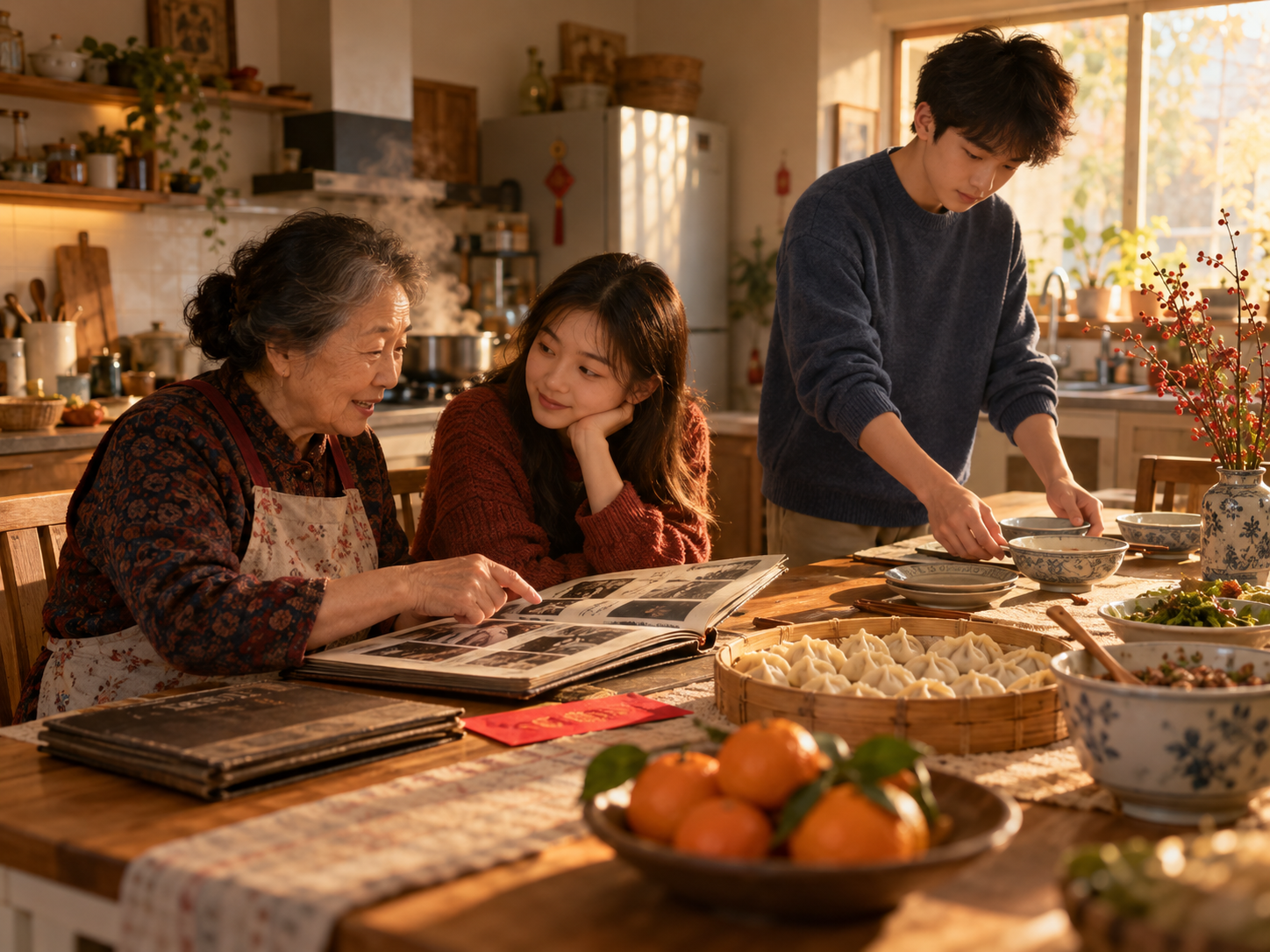
Workshop 05 cover exploring family traditions across generations

Workshop 05

The Celebration That Never Happened

Theme: Family Traditions, Migration, Companionship, and Understanding Across Generations

1. The Starting Story: A Holiday He Could No Longer Remember

When Ethan was younger, he lived with his grandmother in China.

Every year, during an important family holiday, she would prepare special dishes, decorate their home, and teach Ethan traditional phrases associated with the celebration.

Back then, Ethan never really thought about why these traditions existed. To him, they were simply part of everyday life.

Later, he moved to the United States with his parents.

As time passed, Ethan gradually adjusted to his new environment. School activities filled his schedule, English became the language he used most often, and the family holidays he had once celebrated slowly faded from his daily life.

Several years later, Ethan returned to China during summer vacation to visit his grandmother.

She reminded him that an important family holiday was approaching and asked whether he would help prepare for it, just as he had when he was little.

Ethan immediately agreed. He wanted to make his grandmother happy.

But once he began preparing, he realized how much he had forgotten. He could no longer remember the order of the rituals or the traditional phrases he used to say as a child.

He started searching online and calling his parents, hoping to recreate the celebration as he remembered it.

Watching him work, his younger sister asked, "Why does everything have to be exactly the way it used to be?"

Ethan replied that these were their family traditions.

His sister then asked, "Do you actually want to celebrate, or are you just afraid of disappointing Grandma?"

For a moment, Ethan didn't know how to answer.

2. What If?

What If A: What if Ethan invited an American friend to celebrate?

An American friend who had traveled to China with Ethan joined the family celebration. But the friend knew almost nothing about the tradition and kept asking questions. "Why do you make this dish?" "Why do you use these decorations?" "What does this custom mean?" At first, Ethan felt irritated. He had already forgotten so much himself, and his friend's questions only made him more aware of how little he knew. Eventually, he went to his grandmother and asked what these customs really meant. She explained the holiday's background and told him that some of their family's traditions had developed gradually through years of living together. For the first time, Ethan realized that as a child, he had simply repeated these customs without ever asking what they meant. A friend from a different cultural background had unexpectedly encouraged him to reconsider something he had always taken for granted.

What If B: What if his grandmother had changed the tradition herself?

Ethan asked his grandmother how she had celebrated the holiday when she was young. To his surprise, she explained that many traditions had changed after she moved from the countryside to the city. Some ingredients were no longer available, certain relatives could no longer attend, and some new ways of celebrating had been created with friends over the years. Ethan was surprised. He had always believed that preserving a tradition meant keeping it exactly as it had been in the past. Now he realized that the "original" celebration he was trying to recreate had itself been shaped by his grandmother's adjustments to changing circumstances. Perhaps preserving traditions was not simply about keeping the past unchanged. Each generation also had to decide what was worth carrying forward.

What If C: What if his sister refused to celebrate?

Ethan's sister insisted that she did not want to participate in the celebration. Angry, Ethan accused her of not caring about their family traditions. She replied that she certainly loved their grandmother, but she did not want to pretend to believe in or enjoy certain rituals simply because her family expected her to. Then she asked, "You've spent all this time preparing for the holiday, but when was the last time you sat down and asked Grandma how she's been?" Later, Ethan found his sister looking through old photographs with their grandmother and listening to stories about relatives and family life from years ago. His sister still did not participate in the full celebration, but she was spending time with their grandmother in her own way. In the end, Ethan continued preparing the holiday meal while his sister looked through photographs with their grandmother. The siblings did not completely resolve their disagreement, but they had begun to understand each other better.

3. Reflection

My original idea was for Ethan to rediscover the meaning of his family traditions and repair his relationships through change and communication.

But the different stories participants imagined made me realize that I had been expecting a particular kind of ideal ending: if people understood one another well enough, they would eventually reconcile.

Real relationships, however, are not always that simple.

Understanding someone does not mean they must accept our values, and caring about someone does not mean we must express that care in the same way.

I do not need every story to have a happy ending.

What matters more is giving each character's choices a fair and thoughtful explanation, and allowing participants to work together to create a more believable story, even when they do not agree with one another.

What are we really trying to preserve: the tradition itself, or the relationships that give it meaning?

A Note from Kingsun Wang, Founder of What If? Creative Writing Lab

Beyond One Ending: The Idea Behind What If?

Having lived in China, Thailand, Switzerland, and the United States, I have spent much of my life adjusting to unfamiliar languages, cultures, and expectations. Over time, I came to appreciate how moving between different places had helped me develop resilience.

But I also began to wonder: Had my own experiences shaped the way I understood other people's challenges?

I often looked for ways to adapt, solve problems, and move forward. But what about experiences that could not be resolved so easily? What about losses that did not immediately lead to personal growth?

These questions became part of the inspiration behind What If? Creative Writing Lab.

The project brings participants together to explore migration, faith, identity, and belonging through collaborative storytelling. Rather than beginning with a conclusion, each workshop begins with an unfinished story.

Participants create characters, develop conflicts, and imagine how a story might unfold. Then we ask a simple question:

"What if something were different?"

What if a character made another choice? What if someone refused to change? What if the person we initially disagreed with had a reason we had never considered?

Different groups develop alternative storylines, exchange drafts, question one another's assumptions, and revise their work.

Our goal is not to determine which ending is correct, but to explore how different experiences can change the way a story is told.

Several questions run through these workshops: Who decides what success looks like? How much should someone change in order to belong? What responsibilities do we have toward people whose experiences differ from our own? Can we understand someone without agreeing with every choice they make?

I hope What If? can become a space where participants do more than share their perspectives. Through writing and revision, they can create something together that none of them could have produced alone.

The stories may have different endings, but the process of creating them is shared.

Sometimes, the most important question is not how a story should end, but whose perspective we have yet to consider.